
The multi-location problem
Running communication for one restaurant is already a full-time job. At 5, 10, or 50 locations it becomes exponentially harder. Every location has its own market, its own team, its own events, yet still has to look like the same brand.
The data is clear: 73% of franchise groups name brand consistency as their single biggest marketing challenge (HubSpot, 2025). And the cost of inconsistency is measurable: groups that hold a coherent brand across locations generate around 23% more revenue than those that do not.
Building a franchise communication strategy
A working franchise strategy operates on three complementary layers:
- Corporate content (head office): visual identity, templates, national campaigns, brand values. The non-negotiable frame that keeps things coherent.
- Regional content: seasonal promotions, local events, market-specific adaptations. Owned by area managers.
- Hyperlocal content: today's special, the room, the local team, neighborhood partnerships. Created by each location, inside the frame.
For that architecture to hold you need three things: a clear editorial guide, locked templates that cannot be broken, and an approval workflow that does not become a bottleneck.
Centralizing publishing across locations
Centralized publishing is where franchise communication is won or lost. Without the right tool you get either chaos (everyone posts whatever) or paralysis (everything goes through head office and nothing ships).
What a franchise publishing platform has to offer:
- Every account in one interface: see and manage all locations from a single dashboard
- Multi-location scheduling: push the same post, or variants, to many locations in one action
- Approval workflow: the operator creates, head office approves before anything publishes
- Local personalization: the same campaign with each location's address, hours, and specifics
- Permission levels: who can publish what, defined centrally
Ready to fill more tables?
Put your social media on autopilot in 5 minutes
Choose your plan →or book a demoAutomating local content without going generic
Automation is unavoidable at group scale. Done badly it produces content that actively hurts the brand. The distinction that matters is what you automate.
🎯 What to automate, and how far
| Content type | Automatable | How | Authenticity |
|---|---|---|---|
| National promotions | 100% | Template + auto personalization | ★★★☆☆ |
| Daily specials | 70% | Local photo + AI caption | ★★★★☆ |
| Google review replies | 90% | AI personalized by context | ★★★★☆ |
| Team and behind the scenes | 20% | The local team has to film it | ★★★★★ |
| Local events | 50% | Template + local details | ★★★★☆ |
| Performance reporting | 100% | Automated dashboard | N/A |
The rule: automate the frame and the distribution, never the local human moment.
Handling reviews across every location
Every location accumulates its own Google reviews. At ten restaurants that is potentially dozens a week to monitor. Without a process it does not happen.
What is at stake:
- One unanswered bad review at one location can shape perception of the whole brand
- Replies need a consistent brand tone but genuinely local content
- Each location's rating drives its own Maps ranking
The approach that works: one centralized review dashboard across all locations, AI-drafted replies personalized by local context, immediate alerts on anything sensitive, and a monthly comparison so you can see which locations need help.
Measuring performance location by location
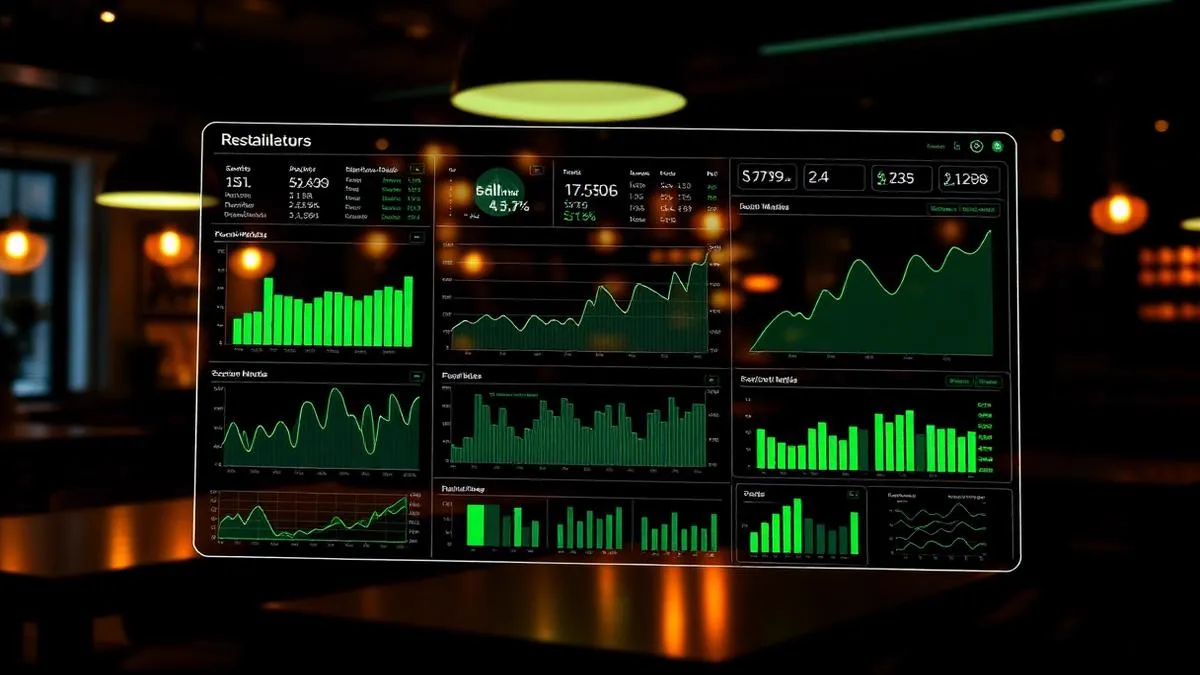
What is not measured does not improve. For a group, per-location measurement is how you find both your problems and your best practices.
KPIs to track per location:
- Engagement rate: target above 3% in food service
- Local reach: how far posts travel inside the trade area
- Google rating: movement in average rating and review volume
- Review response rate: target 100% within 24 hours
- Posting frequency: is the calendar actually being followed
Internal benchmarking is a powerful lever: showing operators how the strongest locations perform creates useful competitive pressure. "One location gained 47 reviews this month at a 100% response rate" lands harder than any directive from head office.
Ready to fill more tables?
Put your social media on autopilot in 5 minutes
Choose your plan →or book a demoGrattin for franchise groups
Grattin for franchises was built for exactly these constraints:
- Multi-location dashboard: every location with live key indicators
- Locked brand templates: operators personalize without breaking the identity
- Central or local publishing: head office pushes a national campaign in one action, or each location runs itself
- Multi-location review management: AI replies by local context with simple approval
- Consolidated reporting: group performance and per-location comparison