The restaurant visibility triangle: social, local SEO, and reviews
Restaurant digital marketing rests on three pillars that feed each other. We call it the restaurant visibility triangle:
- Social media: your creative storefront — where you build the brand and create appetite
- Local SEO: your visibility on Google — when people search for somewhere to eat nearby
- Guest reviews: your social proof — what turns curiosity into a booking
Each pillar strengthens the others: good social content drives visits, visits produce reviews, reviews lift your local ranking, the ranking drives more visits. It compounds.
Restaurants that get all three right see revenue climb 20 to 35% over 12 months (HubSpot, 2025). Neglect one and the other two weaken.
📊 The visibility triangle: impact by pillar
| Pillar | Revenue impact | Time to results | Effort |
|---|---|---|---|
| Social media | +14% average | 1-3 months | ⭐⭐⭐ |
| Local SEO / Google | +20% visits | 3-6 months | ⭐⭐ |
| Guest reviews | +5-9% per star | 1-2 months | ⭐ |
Sources: HubSpot 2025, Moz Local Search Ranking Factors, Harvard Business Review
Local SEO: how to own Google in your area
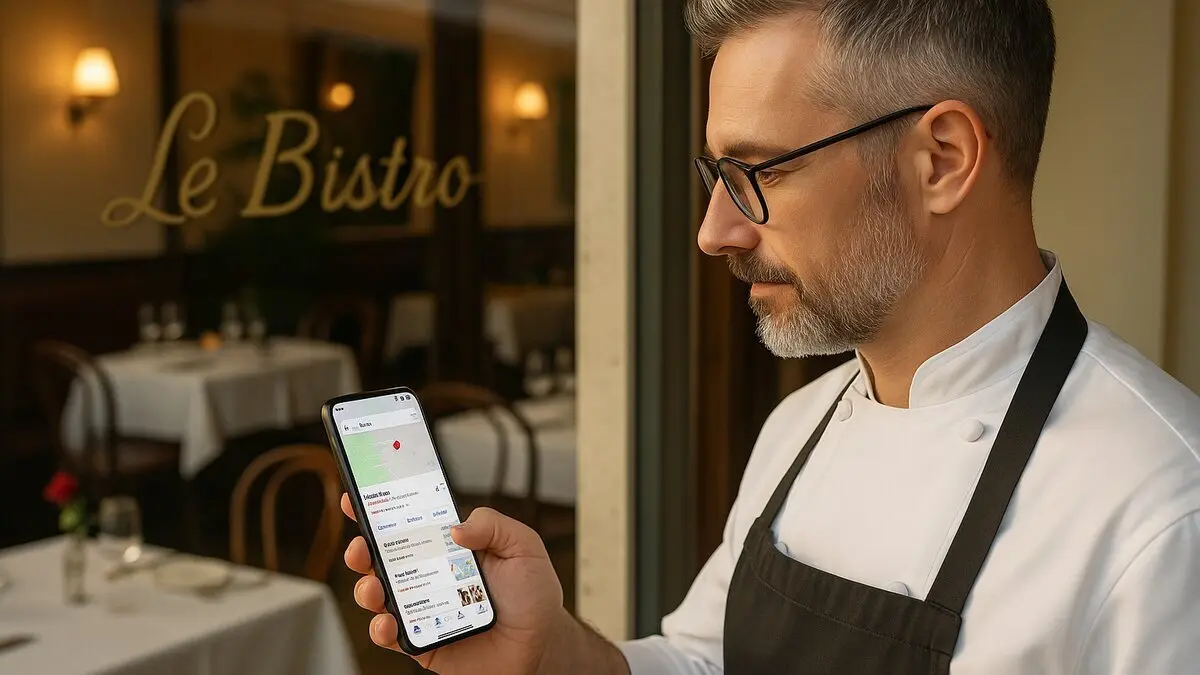
When someone searches "italian restaurant near me" or "best brunch downtown," do you show up? Local SEO is how you capture that demand.
Your Google Business Profile — priority number one:
- Fill it out completely: photos, hours, menu, a real description
- Publish two to three Google Posts a week (much like social posts)
- Add fresh photos regularly — Google favors active listings
- Reply to every review, good and bad
Your website:
- Write title tags and meta descriptions around your local keywords
- Build a page per offering (brunch, private events, delivery)
- Pull your Google reviews onto the site to enrich the content
- Make sure it is fast and works properly on a phone
Citations and directories:
List your restaurant where it counts: Google Business Profile, Yelp, TripAdvisor, OpenTable. Keep your NAP (name, address, phone) identical everywhere — inconsistency costs you ranking.
Turning reviews into a growth lever
Reviews decide bookings. 93% of consumers read reviews before choosing a restaurant (BrightLocal, 2025). Here is how to make that an advantage.
Ask, systematically:
- Request a review after every good experience, in person or by text
- Remove the friction: a QR code on the table, a link on the check
- Train your team to spot happy guests and actually ask
Answering positive reviews:
Thank each guest, reference something specific about their visit if you can, and invite them back. A personal reply signals you were paying attention.
Handling negative reviews:
- Respond within 24 hours
- Stay calm and professional, never defensive
- Acknowledge the issue and apologize
- Offer something concrete
- Move the rest of the conversation to private
A well-handled bad review can work in your favor. Prospective guests read your responses, not just your rating.
For the full playbook, see our complete guide to Google reviews.
Social media: the engine of the whole thing
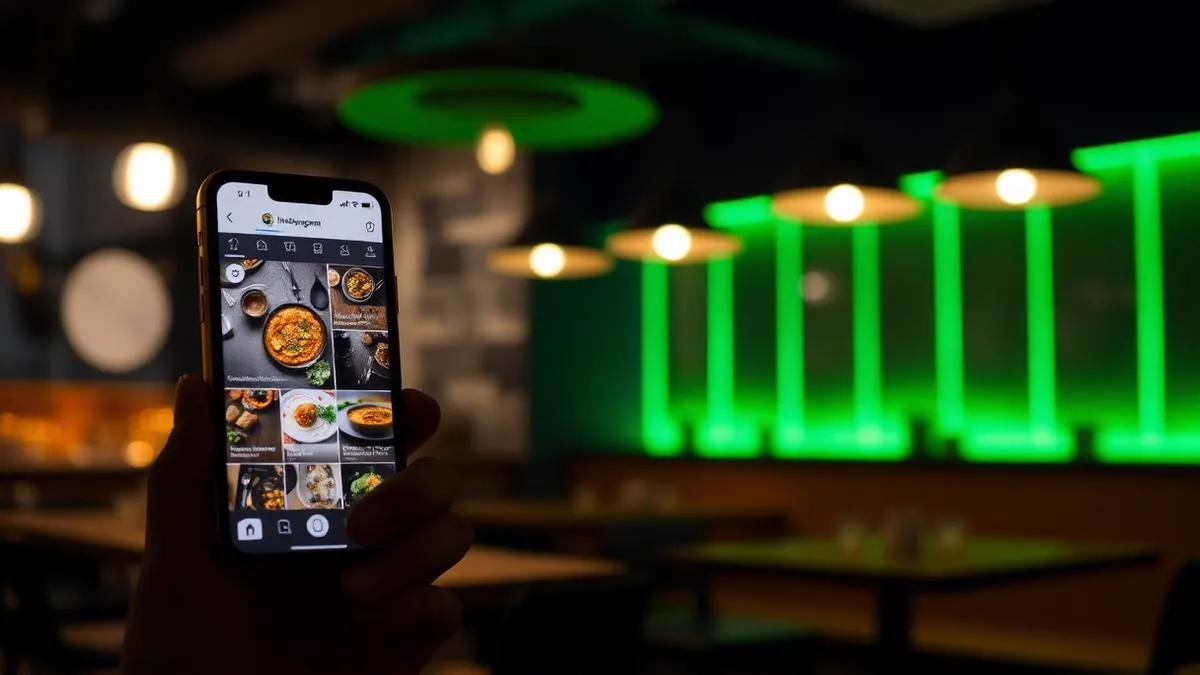
Of the three pillars, social is the most dynamic. It is where you build the image, tell the story, and create the appetite.
Priority platforms for a restaurant in 2026:
- Instagram: the primary platform for food. Essential for photography and reels. See the full strategy.
- TikTok: the best reach available, especially for the 18-35 crowd. How to make video that travels.
- Google Business Profile: rarely thought of as social, and yet the single highest-converting surface you have.
- Facebook: still relevant for events and guests over 35.
Do not spread yourself thin. Pick two or three platforms and be genuinely good there rather than mediocre on five.
Measuring the return
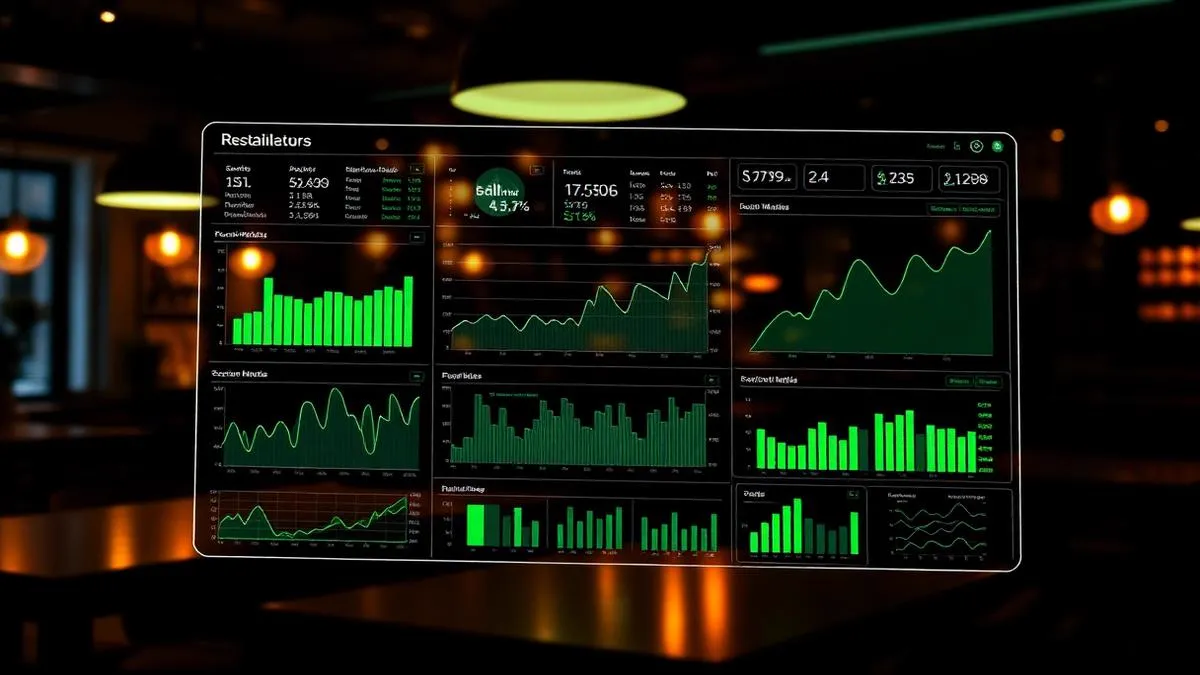
Digital marketing has one big advantage over traditional: everything is measurable.
What to track, by channel:
- Social: followers, engagement, reach, clicks to reservation
- Google: direct searches, directions requests, calls, site visits
- Reviews: average rating, review count, response rate
A simple ROI formula:
ROI = (incremental revenue from digital − digital investment) / digital investment × 100
For a restaurant investing about $250/month (tools plus the value of the time) and generating $3,000 in incremental revenue, that is a return of roughly 1,100%.
These are order-of-magnitude figures, not a guarantee — but they explain why digital is where an independent restaurant gets the most leverage per dollar.